Lower hauling costs
Reduces overall hauling and disposal costs by scheduling service when compactors are truly ready.
WasteNet’s patented industrial compactor monitoring system — accurate fullness data, smarter service timing, and major savings on hauling and disposal.

Compactor Monitoring Program
Computer Engineered Solutions, Inc. is the exclusive manufacturer of trash compactor monitoring units and host monitoring software for WasteNet.
Since signing its first client in 1992, WasteNet has averaged more than a 50% reduction in disposal trips, helping clients save millions of dollars in hauling and disposal costs.
of trash compactors hauled to landfills are less than full — driving higher cost, lost profits, and unnecessary environmental impact.
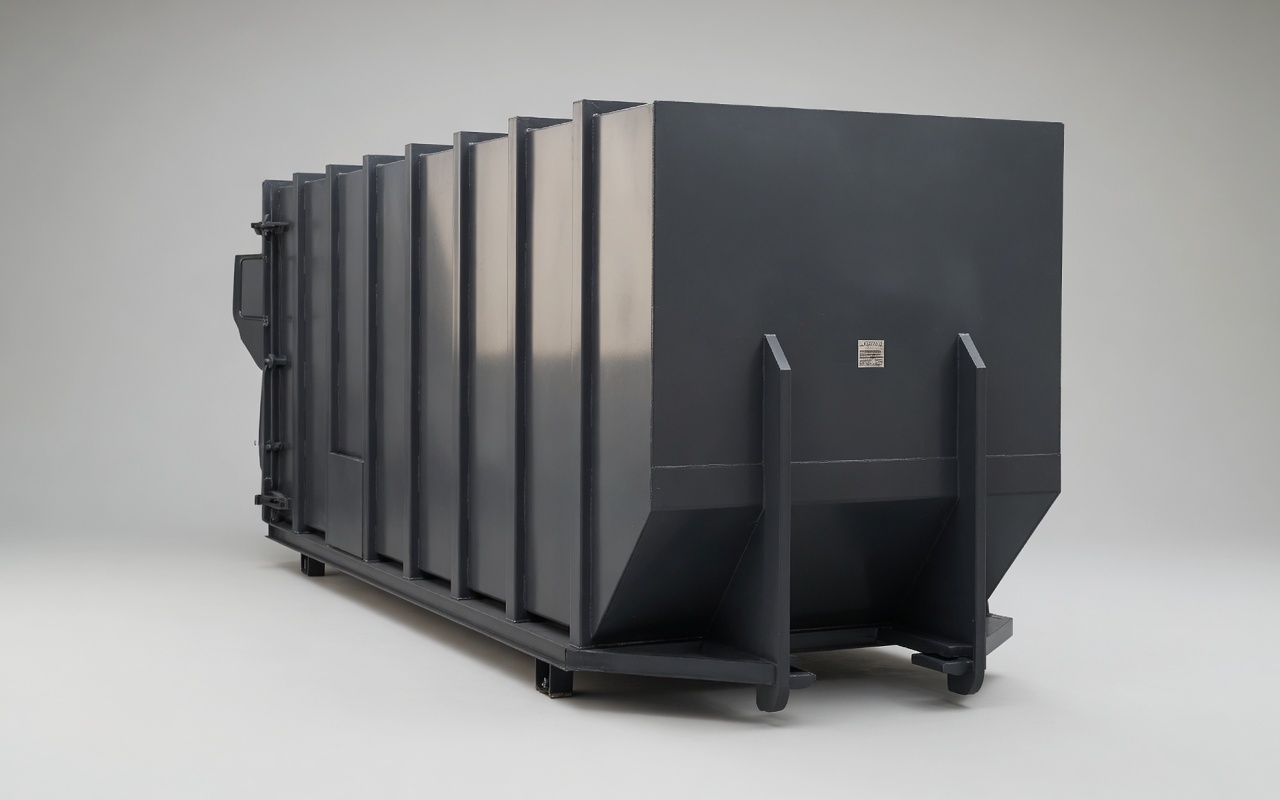
The reality is that there are only two moments when the exact fullness of a compactor is truly known: when it is completely empty and when it has reached full capacity. At all other times, fullness is largely an estimate that can change dramatically from one compaction cycle to the next.
For decades, the waste industry lacked the technology needed to accurately monitor compactor fullness, leaving the responsibility of determining when service is needed to the user.
Since signing our first client in 1992, WasteNet has averaged more than a 50% reduction in disposal trips, helping clients save millions of dollars in hauling and disposal costs.
Recognizing this industry-wide problem firsthand, WasteNet developed and patented a proprietary compactor monitoring system designed specifically for industrial waste compactors.
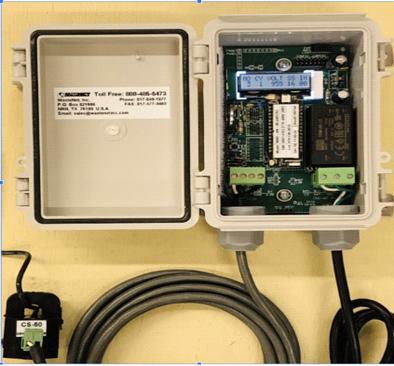
Our monitor uses technology similar to an electrician’s ammeter to measure the electrical current required during each compaction cycle. This data is transmitted wirelessly to WasteNet’s HOST computer, where proprietary software converts the information into a visual representation of compactor fullness and activity.
Using Fullness, Cycle, and Usage graphs — along with operational experience and available hauling schedules — a WasteNet professional evaluates the data to determine the most appropriate service time for your compactor.
Reduces overall hauling and disposal costs by scheduling service when compactors are truly ready.
Improves operational efficiency with data-driven service timing instead of guesswork.
Supports sustainability and carbon-reduction initiatives by cutting unnecessary truck trips.
Helps maintain compliance with government-imposed hauling weight limits.
Reduces unnecessary service calls and costly partial or early pickups.
Provides immediate visibility into operational issues before they become downtime.
One of the most valuable features of the WasteNet program is direct access to the WasteNet team 24 hours a day, 365 days a year.
Once contacted, WasteNet can remotely inspect your compactor in real time to determine whether the unit is full, jammed, spiking, experiencing a mechanical issue, or operating normally.
This helps eliminate unnecessary downtime, confusion, and costly unnecessary hauls.
WasteNet can assess whether your unit is:
WasteNet is not associated with your waste hauler or any hauling company. WasteNet does not transport waste or haul compactors.
WasteNet’s role is to monitor industrial compactors and coordinate service timing with your existing hauler.
WasteNet focuses exclusively on industrial compactors and does not monitor open-top containers, which are more effectively managed through direct on-site observation.
The safest and most reliable installation location is typically inside the Main Electrical Panel. This environment is generally protected behind locked doors and shielded from weather and outside exposure, contributing to exceptional long-term reliability — with many monitors remaining operational for more than twenty (20) plus years.
The monitor may also be installed at the electrical disconnect or anywhere along the wiring supplying power to the compactor’s compression motor.
Importantly:
WasteNet professionals use Fullness, Cycle, and Usage graphs — with operational experience and hauling schedules — to choose the best service time for your equipment. Sample screens from the WasteNet HOST software are shown below.
The Trend Graph plots each compaction cycle relative to fullness.
This allows WasteNet to monitor changing usage patterns and trends in fullness over time.

Example Trend Graph from WasteNet HOST software (fullness vs. cycle history).
The Cycle Graph visually represents the movement of the compactor RAM during operation, including:
This graph helps identify abnormal operating conditions, jamming, or mechanical issues.
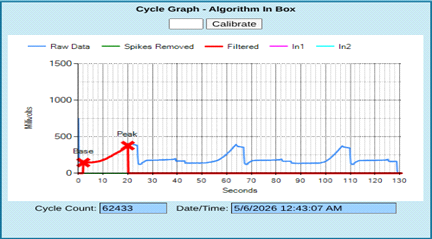
Example Cycle Graph — motor current during a single compaction cycle.
This graph tracks the number of cycles performed each day and highlights fluctuations in usage patterns.
Monitoring these trends helps anticipate service needs before operational problems occur.

Example Daily Cycle Count view — day-by-day usage for pattern analysis.
Not every high reading or shutdown means the container is ready for service. WasteNet helps separate true fullness from conditions that only look like capacity is reached.
Jamming, or “spiking,” occurs when the compression motor suddenly encounters unusually high resistance. This can cause fullness readings to rapidly surge — for example, from 10% to 80% in a single cycle — before returning to normal with continued use.
When this occurs:
This often results in unnecessary service calls, even though significant usable capacity remains.
Bridging is a common condition related to compactor design. Material can become trapped between the RAM and the container’s beveled rear wall, causing trash to repeatedly roll over itself rather than compact efficiently.
This “yo-yo” effect can create misleading conditions of fullness and reduce operational efficiency until the compactor reaches its true capacity.
The Cycle Graph can also identify developing mechanical problems. Distorted or irregular signals may indicate issues such as:
Early detection helps prevent unnecessary hauls and allows operational issues to be addressed more quickly.
WasteNet uses a proactive approach to compactor management. Rather than waiting for a compactor to overflow, jam, or shut down before reacting, WasteNet continuously evaluates fullness trends, usage patterns, operational behavior, and hauling availability to help determine the most appropriate service schedule.
In contrast, traditional industry practices are often reactive, relying on fixed schedules or responding only to service requests after problems have already occurred.
Reactive methods wait for fixed routes or emergency requests after issues appear.
Product sales and program information for WasteNet compactor monitoring are handled by WasteNet, Inc. in Fort Worth, Texas.
CES manufactures the monitoring units and host the software. Contact CES for manufacturing or engineering questions related to the hardware and software.
Contact CESFort Worth, TX
Support available 24 hours a day, 365 days a year.
Ask WasteNet about the Compactor Monitoring Program — or contact CES about the hardware we manufacture.
Visit wastenetinc.com Call (888) 485-5473 Contact CES